

Statement by Deputy Minister of Foreign Affairs and International Trade at the Dialogue with Armenia on the sidelines of the 31st session of the Committee on Enforced Disappearance
16 September, 2026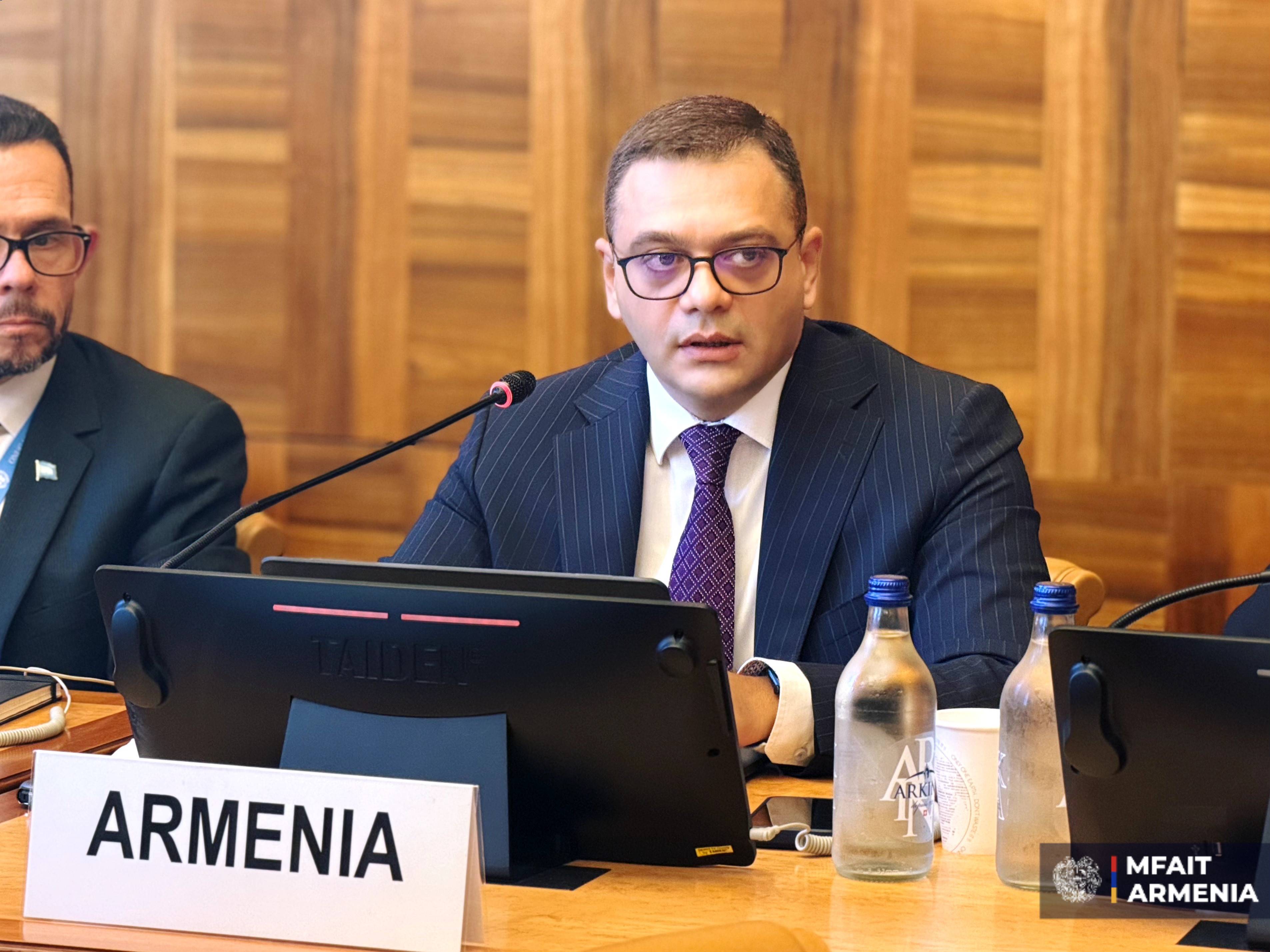
Honorable Chair,
Distinguished members of the Committee,
Ladies and Gentlemen,
On behalf of the Government of the Republic of Armenia, I would like to express our appreciation to the Committee for the opportunity to present updated information regarding the implementation by Armenia of the International Convention for the Protection of All Persons from Enforced Disappearance.
This year marks the 20th anniversary of the adoption of the Convention and our dialogue with the Committee today takes place against this important milestone, providing a timely opportunity not only to reaffirm Armenia’s commitment to the objectives of the Convention, but also to provide further clarification on the progress achieved and to reflect on the remaining challenges in ensuring the full and effective implementation of the Convention.
As a State Party to the Convention, Armenia has been subject to the obligations arising under the Convention since its entry into force for Armenia in January 2011.
Our presentation will focus primarily on the developments achieved in recent years in relation to the implementation of the Committee’s concluding observations. It will provide an overview of the legislative, institutional and practical measures undertaken by Armenia, taking into account the List of Priority Themes and the additional information submitted in April 2022 under article 29, paragraph 4, of the Convention.
At the outset, I would like to reiterate Armenia’s firm commitment to fulfilling its obligations under the Convention and ensuring their effective implementation at the national level. Armenia attaches particular importance to the protection of human dignity and fundamental rights, the rule of law and access to justice and effective remedies for victims and their families.
For Armenia, the prevention and effective investigation of enforced disappearance is not only a matter of fulfilling an international legal obligation. It is also a matter of protecting the dignity of every individual and ensuring that families are not left in a state of uncertainty concerning the fate and whereabouts of their loved ones.
The pain, uncertainty and prolonged suffering endured by victims and their families must not be overlooked. Their rights to truth, justice, reparation and dignity must remain at the center of our efforts. In this regard, Armenia recognizes the particular vulnerability of families of missing persons and the need to ensure that they receive timely and reliable information, appropriate support and effective access to relevant procedures.
Allow me also to briefly address the particularly difficult circumstances in which Armenia has had to implement its obligations under the Convention in recent years.
Over the past six years, Armenia has faced serious and unprecedented challenges arising from the past conflict in our region.
Among the consequences of these events has been a significant number of persons reported missing, including individuals who, based on the available evidence and the circumstances surrounding their disappearance, are victims of enforced disappearance. In most of these cases, Armenia has relevant information that could be presented to the Committee. Cases involving the enforced disappearance of Armenian soldiers following their capture raised concerns among several UN mandate holders in their communication dated 29 July 2024, including the Working Group on Enforced or Involuntary Disappearances.
Chronologically, the cases of enforced disappearance occurred during the 44-day war in 2020, as well as in the context of the events in September 2022. Further cases arose during the displacement of more than 130,000 Karabakh Armenians in September–October 2023.
These circumstances have created significant humanitarian, legal and institutional challenges. They have also demonstrated the importance of having an effective and comprehensive national framework capable of addressing cases of enforced disappearance, ensuring the protection of affected families, facilitating the search for missing persons, and preserving relevant information and evidence.
For the Government of Armenia, these developments have underscored the need to continuously review and strengthen national mechanisms and to take concrete steps both at legislative level and in practice.
One of the most important developments in this regard is the adoption of the new Law of the Republic of Armenia on Persons Who Have Gone Missing under Conditions and Circumstances Resulting from Military Operations, which entered into force in May 2026.
The adoption of this legislation represents an important step toward establishing a comprehensive legal framework for persons who have gone missing as a result of military operations and for their families.
The law addresses a number of issues of direct relevance to the rights and interests of missing persons and their relatives. In particular, it establishes the right of family members to receive reliable and timely information concerning the search for their relatives and the circumstances surrounding their disappearance.
The law also establishes the State’s obligation to undertake appropriate measures to search for missing persons and to clarify their fate and whereabouts. Importantly, it provides for the participation of family members in relevant procedures, recognizing their legitimate interest in being informed about and involved in the search process.
The legislation further provides for financial compensation and certain social benefits for families of missing persons, thereby recognizing that the disappearance of a family member can have profound economic and social consequences in addition to the emotional suffering involved.
The establishment of appropriate mechanisms for the identification of missing persons is another important element of the framework. This includes measures aimed at facilitating the identification of human remains and establishing, wherever possible, the fate and whereabouts of persons who have disappeared.
At the same time, Armenia recognizes that legislation alone cannot provide a complete response. Effective implementation requires appropriate institutional capacity, inter-agency cooperation, adequate resources, qualified personnel, access to relevant information and evidence, and sustained engagement with affected families.
Another important area concerns the criminal-law framework applicable to enforced disappearance.
The relevant provisions of Armenia’s new Criminal Code, together with the broader framework governing criminal responsibility for serious violations of fundamental rights, are intended to ensure that conduct falling within the scope of the Convention is appropriately addressed through criminal law.
Allow me also to emphasize the importance Armenia attaches to the rights and needs of families of missing and disappeared persons.
In such cases, families may remain for years without reliable information concerning the fate or whereabouts of their relatives. This uncertainty can have severe psychological, social and economic consequences.
For this reason, the response to enforced disappearance and conflict-related disappearances cannot be limited to criminal investigations. Families also require legal assistance, access to information, psychological and social support, and, where applicable, financial assistance and other forms of reparation.
The new legislative framework seeks to address these needs by strengthening the rights of family members and establishing clearer responsibilities on the part of State authorities.
Armenia also recognizes the importance of ensuring that families are treated with dignity and respect throughout the process. Communication with families should be timely, transparent and sensitive to their circumstances. The State has a responsibility to ensure that procedures do not unnecessarily add to the suffering already experienced by those affected.
The search for missing persons and the clarification of their fate and whereabouts remain among the most important practical challenges.
Armenia attaches particular importance to cooperation at both the bilateral and multilateral levels, first and foremost with Azerbaijan, viewing this issue as an exceptional humanitarian concern. The established peace in the region creates favorable conditions for further cooperation in this regard.
As an active advocate for the prevention of atrocity crimes and the protection of international humanitarian law, Armenia has joined the Global Initiative to Galvanize Political Commitment to International Humanitarian Law.
Armenia therefore considers international cooperation an essential complement to national efforts, both in fulfilling its legal obligations and in providing practical support to persons affected by enforced disappearance.
Armenia continues its engagement with international humanitarian organizations and relevant stakeholders to support affected families and contribute to international efforts to prevent and address the grave humanitarian consequences of enforced disappearance.
A particularly valuable example of such cooperation is the psychosocial rehabilitation programme implemented with the financial support of the Government of the Republic of Slovenia and carried out by ITF Enhancing Human Security, in cooperation with Armenian partners.
The programme provides specialized psychosocial support to relatives of persons who went missing or were subject to enforced disappearance, addressing the profound and long-term consequences of loss, uncertainty, and unresolved trauma. At the same time, it contributes to strengthening sustainable national capacities by involving and training Armenian specialists in the provision of psychosocial assistance.
To date, two groups of relatives of missing persons have participated in the programme in Slovenia. The first group consisted of mothers, followed by a second group of fathers. The programme for fathers brought together 12 participants from Armenia and included professional psychosocial rehabilitation activities, including therapeutic and experiential programmes. The participation of both mothers and fathers underscores the importance of a comprehensive and inclusive approach to addressing the humanitarian consequences of enforced disappearance. In this regard, we would like to take this opportunity to express our sincere appreciation to the Government of the Republic of Slovenia for its valuable support and continued commitment to assisting families affected by enforced disappearance.
The Republic of Armenia maintains close cooperation with the International Committee of the Red Cross (ICRC) on issues related to missing persons, support for their families, clarification of the fate and whereabouts of persons unaccounted for, forensic matters, and the promotion and implementation of international humanitarian law.
An important component of Armenia’s international cooperation and capacity-building efforts was the study visit of a high-level Armenian delegation to Cyprus, organized with the support of the ICRC in May 2026. The visit provided an opportunity for the Armenian delegation to learn from the experience of the Committee on Missing Persons in Cyprus (CMP) and to exchange views with its representatives on the institutional, legal, humanitarian, and practical aspects of addressing the issue of missing persons. The exchange of experience offered valuable insights into possible approaches to strengthening institutional mechanisms and enhancing cooperation in this field.
Armenia also maintains constructive cooperation with the International Commission on Missing Persons (ICMP), which has provided valuable support in assessing and strengthening national capacities and institutional mechanisms for the search for and identification of missing persons. In 2023, the ICMP conducted a comprehensive assessment of Armenia’s legislative and institutional framework, as well as its scientific and technical capacities. Its engagement has also contributed to strengthening DNA and forensic capacities in Armenia, thereby supporting national efforts to clarify the fate and whereabouts of missing persons and, ultimately, to provide answers to their families.
These partnerships demonstrate the importance Armenia attaches to international cooperation, the exchange of expertise, and the strengthening of national capacities in addressing the issue of missing persons and responding to the needs of affected families.
Honorable Chair,
Distinguished members of the Committee,
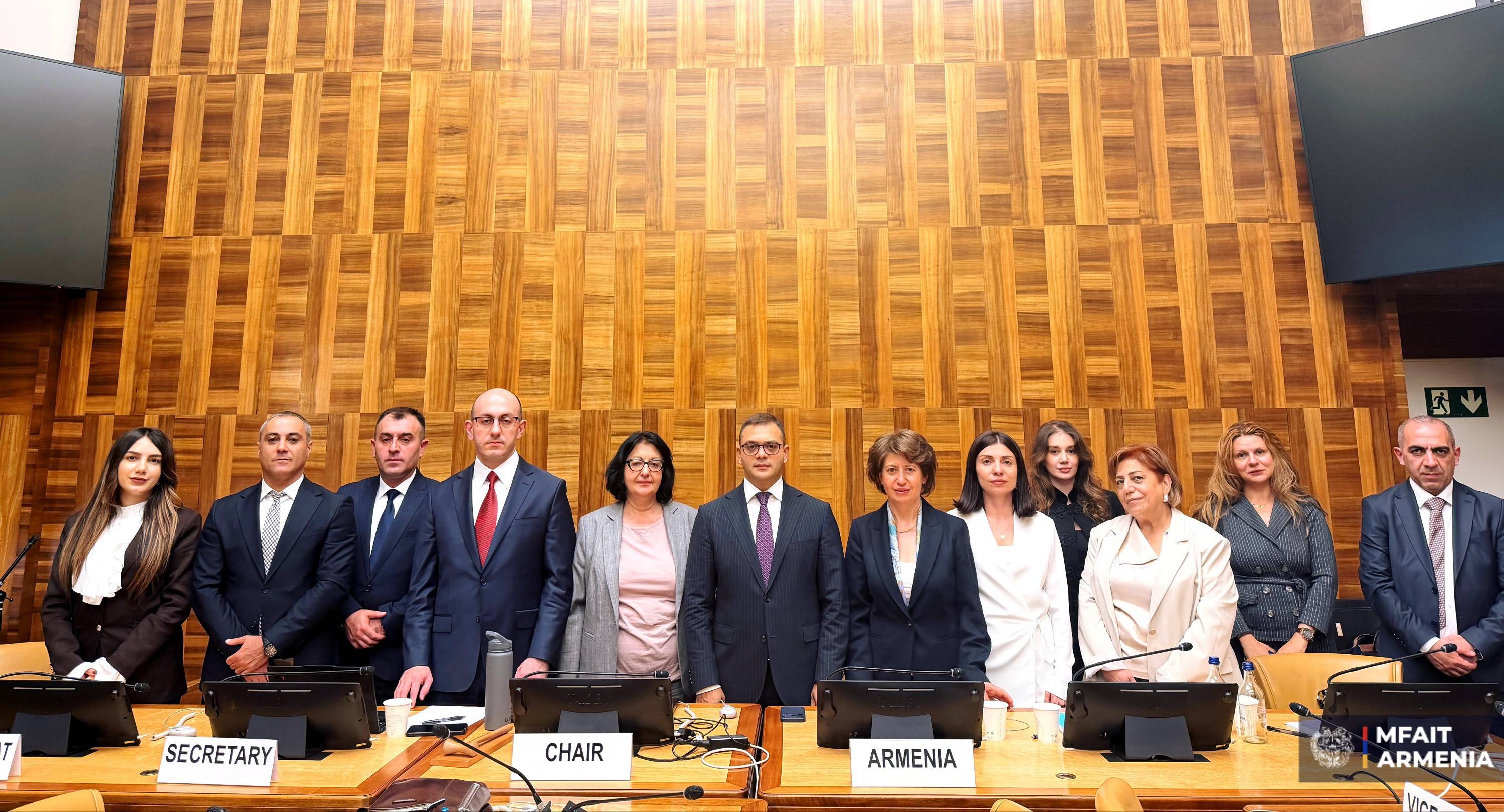
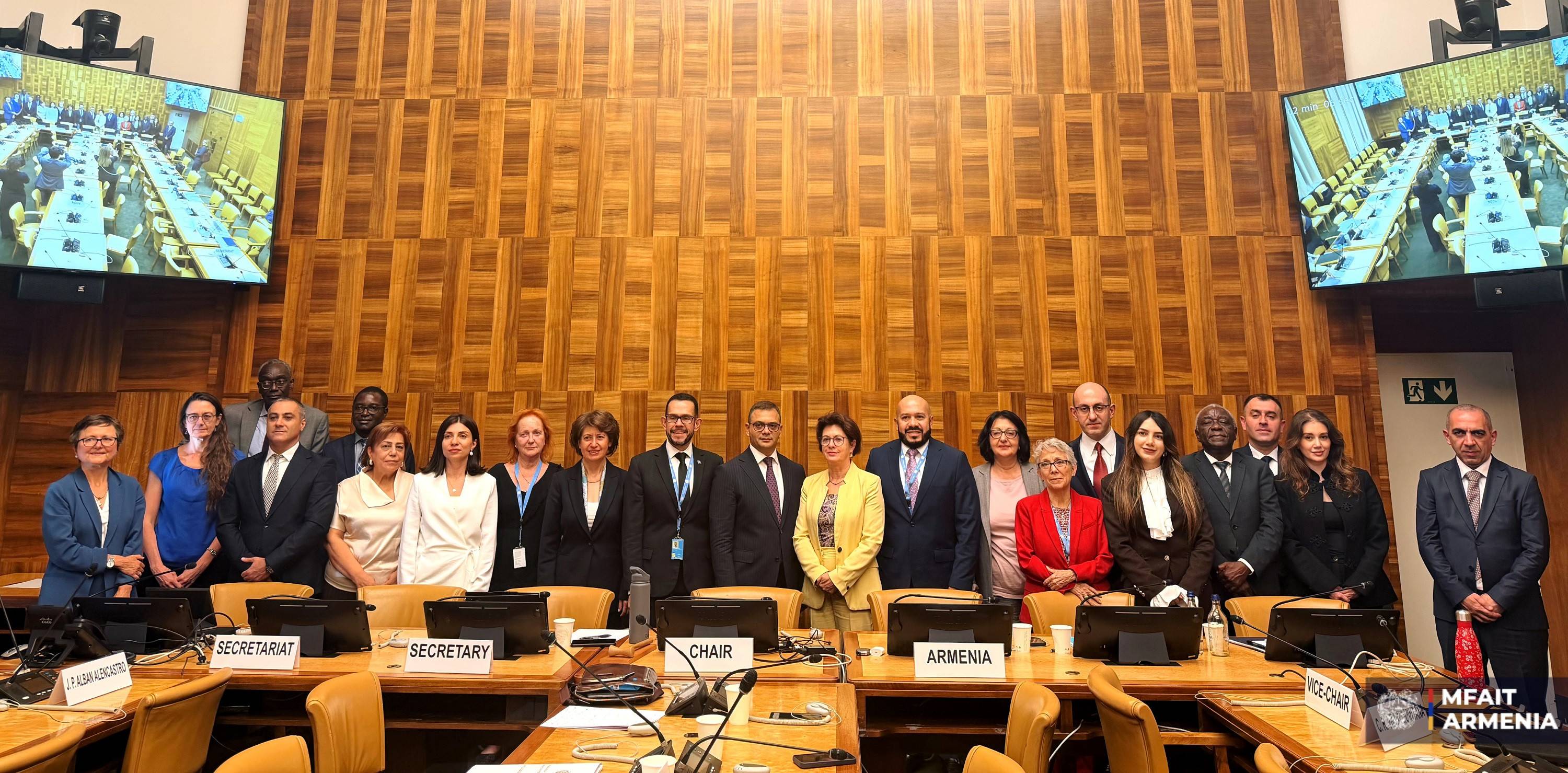
Our delegation today reflects the cross-cutting nature of the issues covered by the Convention and includes representatives of: the Ministry of Foreign Affairs and International Trade, the Ministry of Justice, the Ministry of Internal Affairs, the Ministry of Health, Investigative committee, National Security Service on behalf the Interagency Commission on Matters Concerning Prisoners of War, Hostages and Missing Persons, Office of the Representative of the Republic of Armenia on International Legal Matters and Scientific-Practical Center of Forensic Medicine.
The broad composition of the delegation will allow us to provide detailed information and respond to the Committee’s questions across the different areas covered by the Convention.
Armenia looks forward to a constructive and substantive dialogue with the Committee. We remain ready to provide further information and clarification on the issues raised and to engage openly on the progress achieved, the challenges that remain and the steps needed to further strengthen the implementation of the Convention.
We will now proceed with Armenia’s replies, covering the questions raised under the priority themes identified by the Committee.
Thank you.