

Remarks by Deputy Minister of Foreign Affairs of Armenia Robert Abisoghomonyan at the side event entitled “Enhancing Coherence and Follow-Up in Human Rights Implementation through Digital Tools”
24 February, 2026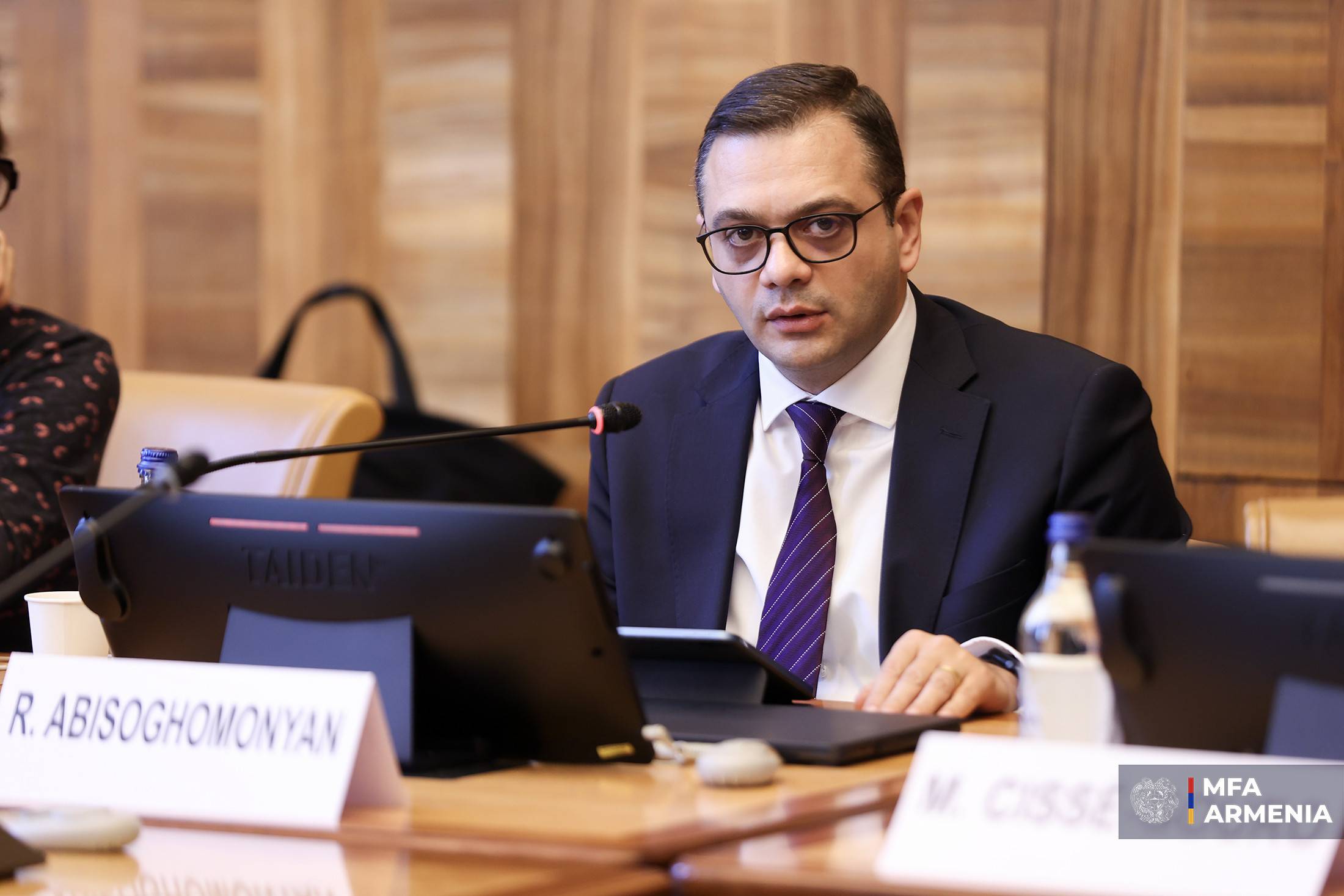
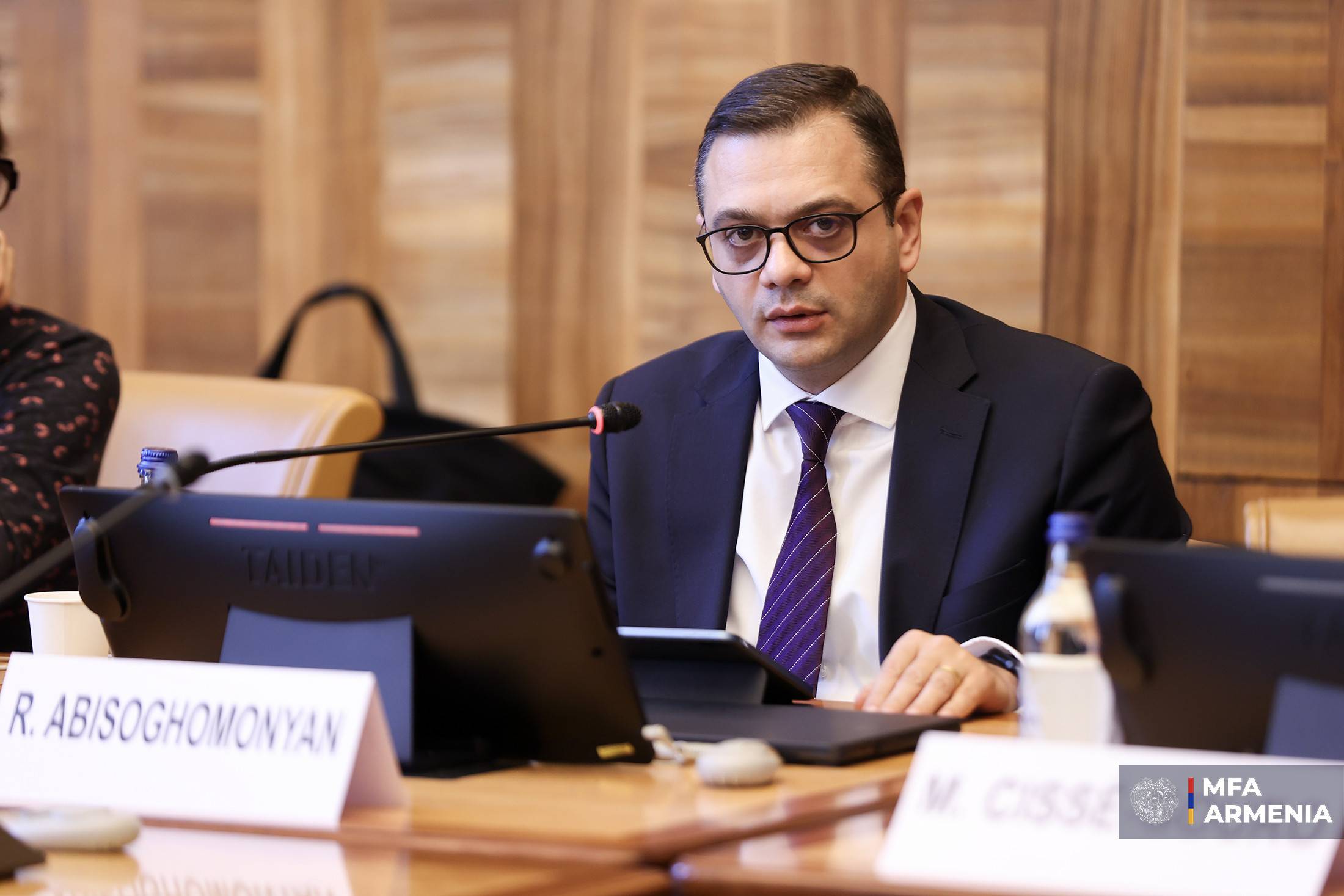
On February 24, in Geneva, on the margins of the 61st Session of the UN Human Rights Council Deputy Minister of Foreign Affairs of Armenia Robert Abisoghomonyan participated and delivered remarks at the side event entitled “Enhancing Coherence and Follow-Up in Human Rights Implementation through Digital Tools”. The event was organized at the initiative of Armenia, in collaboration with the Danish Institute for Human Rights.
The remarks delivered by the Deputy Foreign Minister of Armenia follows below.
“Excellences,
Distinguished colleagues,
Ladies and gentlemen,
It is a pleasure to address this panel and to reflect on how human rights commitments move from paper to practice, and how institutions ensure continuity between promise and delivery.
Allow me at the outset to thank our co-organizers. I wish to express sincere appreciation to the Danish Institute for Human Rights for the close and productive cooperation established, particularly following the Memorandum of Understanding signed one year ago. One year later, we are able to present concrete steps taken to improve coherence and follow-up in human rights implementation.
I also extend our gratitude to the Office of the High Commissioner for Human Rights, whose role in advancing national implementation, reporting and follow-up mechanisms has been central and whose expertise continues to guide national efforts.
Armenia remains actively engaged with international human rights monitoring processes at both the United Nations and regional levels. Over the last few years, we have participated in unprecedented number of treaty body dialogues, submitted periodic reports under regional conventions, and hosted monitoring visits, while maintaining timely cooperation with special procedures and other Human Rights Council mechanisms. Last May, Armenia underwent its fourth cycle of the Universal Periodic Review.
These engagements are not procedural formalities. They reflect an ongoing dialogue with the international community. Reporting, review and follow-up form a continuous cycle of reflection and reform. At the same time, the increasing scope and frequency of monitoring processes have placed considerable pressure on national reporting capacities.
It was in this context that Armenia sought to strengthen efficiency, coordination and institutional memory. The establishment of a standing National Mechanism for Implementation, Reporting and Follow-up in 2024 marked a shift from fragmented reporting toward a permanent and structured system. This step was informed by the guidance of the Office of the High Commissioner for Human Rights.
Drawing on the experience of other states that have developed digital tools, we concluded that our circumstances required a solution tailored to our legal and administrative framework. This is why Armenia identified the need for a complementary national instrument capable of incorporating regional obligations and internal working practices.
For us, effective implementation means covering the full range of monitoring obligations, including those stemming from the Council of Europe system. It also means facilitating day-to-day coordination among institutions, and maintaining internal working notes in the national language. These considerations led us to the development of a national digital tool within the broader framework of our implementation mechanism.
I am pleased to note that this process progressed with notable efficiency. It was made possible by strong governmental support for the digitalization agenda and alignment with the Government’s Digitalization Strategy. Because the institutional infrastructure was already in place, there was no need for lengthy procedures or procurement processes. Thanks to our development team at the Armenia Information Systems Agency Foundation, we were able to create our first national digital platform for human rights implementation and reporting, Armenia’s Institutional Network for Monitoring and Reporting (AI-NEMRA). The platform was designed and deployed in approximately three months, an exceptionally short timeframe for a system of this scope. This demonstrates how institutional ownership, technical expertise and clear policy direction can significantly accelerate implementation.
Excellences,
distinguished colleagues,
Allow me now to turn to the demonstration of the platform.
The public interface presents recommendations through a structured system of filters. Users can search by thematic clusters covering ten key policy areas, as well as by treaty body, whether United Nations mechanisms, the Universal Periodic Review or those under the Council of Europe. The platform also allows searches by reporting cycle, by year or by keywords, and additional drop-down menus will soon be available to further simplify navigation.
We then move to the second interface, accessible to authorized users within the national mechanism. This working space contains implementation-tracking information, including implementation status - planned, ongoing or completed, the responsible institution or institutions, and internal comments allowing more detailed follow-up. The platform therefore functions both as a transparency tool and as a practical coordination instrument supporting day-to-day implementation.
Built on the NewMoon framework powered by Directus, the system uses a modular architecture that allows adaptation and further development. New components can be added without altering the core structure, enabling the platform to evolve alongside changing reporting requirements and policy priorities. While tailored to Armenia’s needs, it carries clear potential for replication, as its structure can be adjusted to different legal and administrative environments. We stand ready to cooperate with interested national mechanisms through exchange of experience and to share lessons learned from the design process, approaches to inter-institutional coordination, and practical aspects of integrating such tools into existing administrative workflows.
Dear colleagues,
Human rights progress is gradual. It develops through dialogue, openness and sustained commitment. In this context, technology and innovation increasingly serve as enablers, helping institutions manage complexity, improve transparency and strengthen implementation. National mechanisms and digital tools are thus not ends in themselves, but practical means to sustain trust both domestically and between states and the international human rights system.
Armenia stands ready to continue exploring innovative approaches that reinforce this objective.
I thank all participants for their engagement and wish you fruitful deliberations.”