

The Deputy Foreign Minister participated in the “Making Multilateralism Fit for the Future” Ministerial discussion
15 July, 2026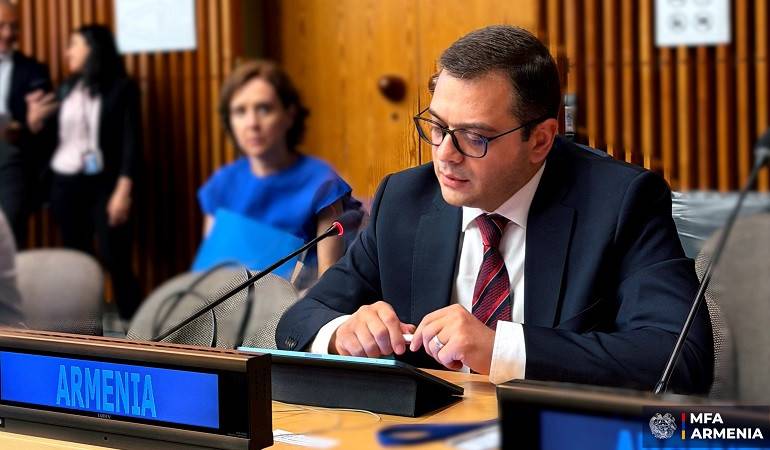
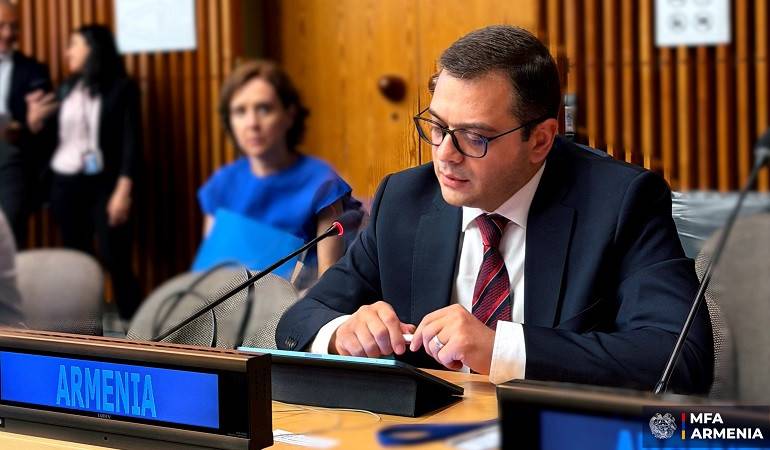
On July 14, Deputy Foreign Minister of Armenia Robert Abisoghomonyan participated and delivered remarks at the Ministerial discussion entitled “Making Multilateralism Fit for the Future”, held on the margins of the informal meeting of the General Assembly dedicated to taking stock of the Pact for the Future.
In his remarks the Deputy Foreign Minister emphasized that the realization of SDGs requires an effective, flexible and robust multilateral system aligned with contemporary development challenges. In this context, it was noted that Armenia is actively engaged in the "UN80" reform process, aimed at strengthening the efficiency and integrity of the UN system, as well as enhancing its operational efficacy.
The Deputy Minister pointed out that adapting the multilateral system to the demands of the future must first and foremost translate into tangible results, ensuring accessible financing, the development of productive capacities, resilient infrastructure and support tailored to national priorities for developing nations. The importance of strengthening national capacities was underscored as a pivotal benchmark for effective development cooperation.
The key role of the UN Economic and Social Council in coordinating economic and social development issues, reviewing policies and formulating recommendations was touched upon. The convening of the High-Level Political Forum on Sustainable Development was highlighted as essential for ensuring the substantive and effective engagement of developing countries in decision-making processes.
In his remarks, Robert Abisoghomonyan also touched upon the necessity of reforming the international financial architecture, presenting the challenges faced by developing countries.
In conclusion, the Deputy Foreign Minister emphasized the vital importance of modernizing the multilateral system, which will contribute to restoring trust in international cooperation and fostering a multilateral architecture capable of effectively responding to contemporary global challenges while reflecting the interests and priorities of all Member States.